
My Danfo Ride From Ojota to CMS: A Lagos Survival Documentary
Some people go to the gym to build endurance. Me? I simply enter a danfo from Ojota to CMS at 7:15 on a Monday morning. By the time I come down, I have done cardio, leg day, and a full course in conflict resolution. Let me tell you how it happened.
Stage One: The Boarding Olympics
The conductor was hanging from the door like a man who signed a contract with gravity and won. “CMS! Obalende! CMS! Enter with your change o!” he shouted, already moving. In Lagos, a danfo never stops; it only slows down out of respect.
I ran beside it like I was in an action film. A woman with a basket of tomatoes overtook me. An elderly man with a walking stick overtook me. Somehow, I made it in, landing on a seat that was clearly designed for three people and currently held five, plus somebody’s handbag that had its own opinions.
Stage Two: The Change Wahala
The fare was N700. I gave the conductor N1,000. He collected it the way a magician collects a coin, and then he simply… looked forward. Into the future. Where my N300 apparently lives now.
“Conductor, my change.”
“I hear you, Oga. Wait small.”
In Lagos, “wait small” is a unit of time between thirty seconds and the next presidential election. Three other passengers were also waiting for change. We formed a silent union. We exchanged looks. We were brothers and sisters now, bound by the N300s we may never see again.
Stage Three: The Traffic Has Its Own Weather
Near Third Mainland Bridge, the traffic stopped so completely that I saw a hawker sell bread, Gala, sachet water, a phone charger, and what I believe was a full wardrobe. A man in the next bus started a small business selling advice. Somebody’s car was so still, a bird considered building a nest on it.
The driver turned on the radio. It was playing slow love songs. Nobody asked for this. We were stuck in traffic emotionally and physically.
Stage Four: The Unexpected Sermon
Just as I closed my eyes to rest, a man stood up — stood up, inside a danfo, which is a miracle in itself — and said, “Brethren, I will not take much of your time.” Forty-five minutes later, he had preached, sung, sold herbal medicine that cures “malaria, typhoid, back pain and village people,” and collected an offering.
I gave him N100. Not because I was moved, but because I felt it would get my N300 change moving through some spiritual channel.
Stage Five: The Final Negotiation
At Obalende, the conductor finally remembered us. “Who get change?” he asked, like it was a quiz show. Four hands went up. He looked at his money, looked at us, and said the most dangerous sentence in Lagos transport: “Make una share am.”
He gave one N500 note to four people who were each owed N300. Ladies and gentlemen, I have seen the United Nations work less hard than we did in that bus. We did mathematics. We did diplomacy. A woman in the back row produced a calculator from her bag. By the time we settled it, we had formed a WhatsApp group called “Ojota-CMS Survivors 2026.”
Arrival: A Changed Man
I came down at CMS one hour and fifty minutes after boarding, for a journey Google Maps said would take 35 minutes. My shirt was rearranged, my shoe had a footprint I didn’t own, and I smelled faintly of tomatoes and anointing oil.
But I was alive. And somewhere in that WhatsApp group, a woman was still calculating who owes who N50.
That, my people, is Lagos. You don’t just travel. You graduate.
Have you survived a danfo ride like this? Drop your own story in the comments and share this with that friend who still thinks “wait small” means small.
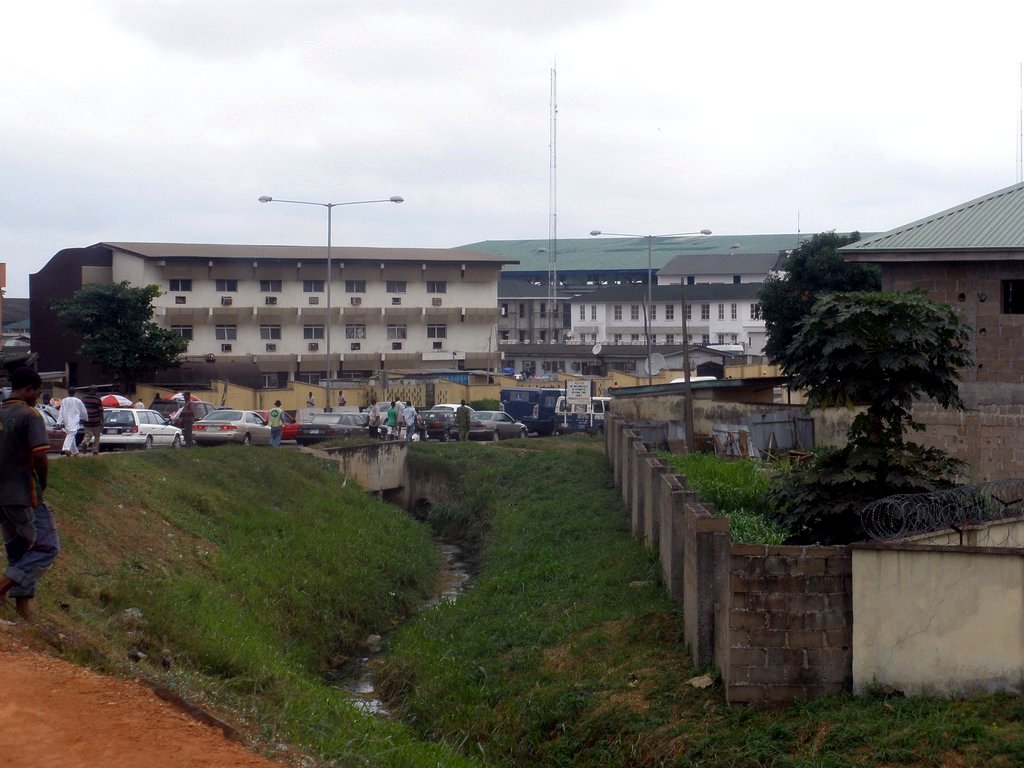
Featured image: Photo: “Lagos Danfo Bus” by AbrahamHaruna, CC BY-SA 4.0, via Openverse — source