
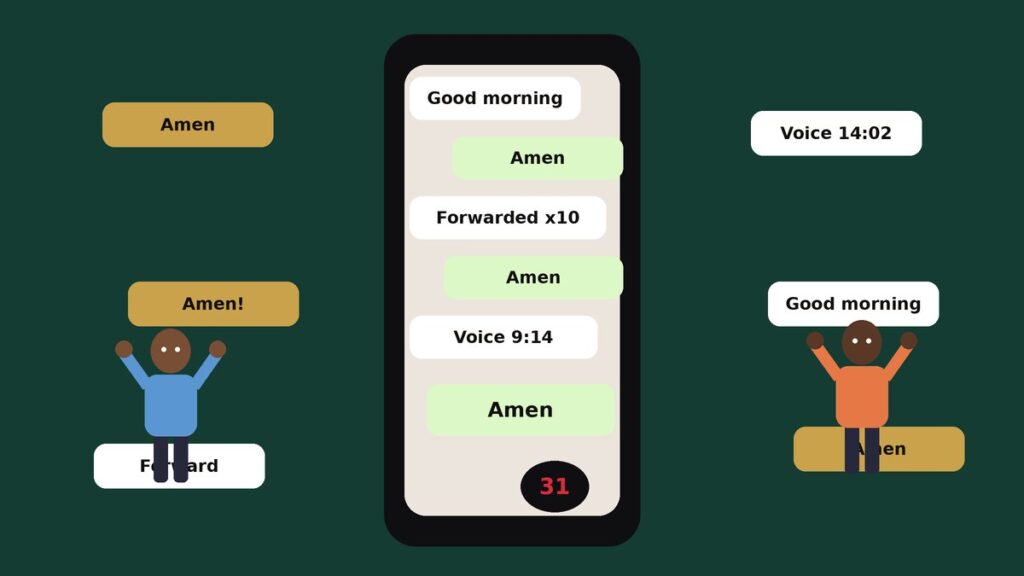
There was a time when family news travelled slowly. You heard it at a wedding, at a funeral or from the neighbour who always arrived before the story did. Then someone added Uncle Emeka to WhatsApp, and the whole system collapsed in a single afternoon.
This is a work of fiction, but if you are in a family group chat, you may feel some of it was written about you.
The Day the Group Was Created
It started innocently. Ifeoma, a thirty-year-old accountant living in the city, decided the family needed a group. “Just for announcements,” she said. She named it “Okeke Family Forever”, added forty-three relatives, and sent a friendly message: “Welcome, everyone. Please keep this group for important updates.”
Within four minutes, she had received twelve replies. Three said “Welcome”. Two said “Thank you”. One said “Who is this?” And one, from Aunty Rose, said “Amen.”
Ifeoma frowned. Amen to what? She had not said anything that needed a prayer. But Aunty Rose, who has said Amen to price lists, weather reports and a message about a lost key, was only getting started.
The Voice Note Era
The first voice note arrived at 5:03 the next morning. It was from Uncle Emeka, and it lasted nine minutes and fourteen seconds. Ifeoma, half asleep, pressed play.
“Hello, hello. Can you hear me? Eh? Good morning, my people. I am just testing this thing. Hello? Okay. I wanted to say good morning. Good morning. Okay, bye.”
The remaining eight minutes were the sound of Uncle Emeka walking to the market, greeting everyone he met, and discussing the price of tomatoes with a woman called Mama Ngozi. He had forgotten to end the recording. The group heard everything, including a long negotiation about a single basket.
By 5:30, forty-one people had listened to it. By 6:00, thirty of them had replied with the laughing emoji, and Aunty Rose had sent a prayer for the tomatoes.
The Forwarded Message Flood
Soon came the forwards. There was the message that said “If you do not send this to ten people, something terrible will happen.” Ifeoma deleted it. Ten minutes later it returned from a different cousin with a new heading: “Please read, this one is true.”
There was a video of a baby goat in a raincoat. There was a long message about how to cure everything with lemon and warm water, which at the end admitted it was not medical advice, in very small letters. There was a picture of a sunrise with the words “Good morning, may your day be blessed”, sent by seven different relatives within the same hour.
And, of course, there was the chain message that promised a miracle if you replied in thirty seconds. Everyone replied in twenty-nine. Nobody got a miracle. But the group became very enthusiastic about the contest.
The Rules of Engagement
After one week, Ifeoma tried to bring order. She sent a message with rules. “No forwarded chain messages. No voice notes over two minutes. Please keep conversations relevant.” Nobody replied for an hour, and she felt hopeful. Then Uncle Emeka answered with a voice note that lasted fourteen minutes. It began, “About those rules…” and ended with a story about his first bicycle.
The cousins reacted with laughing faces. Aunty Rose replied “Amen.” Someone asked if the rules included birthdays. A debate began. It ran for six hours and produced two new subgroups: “Okeke Family Birthdays” and “Okeke Family Birthdays (Real One)”.
By evening Ifeoma was an administrator of three groups, a referee of two arguments and a reluctant listener of a song someone recorded in a bathroom.
The Prayer That Answered Everything
The real star of the chat remained Aunty Rose. She was gentle, sincere and absolutely consistent. If you announced a wedding, she said “Amen.” If you announced a funeral, she said “Amen.” If you announced that your car had broken down, she said “Amen” and added a small praying hands emoji.
One afternoon, a cousin posted: “I have lost my phone charger. Has anyone seen it?” Aunty Rose replied, “Amen, God will restore it.” Ten minutes later the charger was found under the cousin’s pillow. Aunty Rose posted again: “I told you. Amen.”
It became a family legend. Nobody could prove the prayer worked, but nobody was brave enough to stop it either.
The Peace That Came at Last
After a month, the group was still alive, still loud, and strangely precious. Ifeoma noticed something. Between the forwards, voice notes and emojis, her relatives were talking to each other more than they had in years. Cousins who lived in different cities were sharing photos. Uncles who never phoned were sending good-morning messages. Even the baby goat video had started a long argument about whether goats feel cold.
One night, when the chat was quiet, Ifeoma typed a simple message: “I am glad we are all here.”
The reply came in seconds. It was Aunty Rose. “Amen.”
And for once, Ifeoma smiled and typed back, “Amen.”